그것은 완전히 생분해 가능한 바이오-베이스 PLA로 만들어집니다 특징: 1. 산업용 퇴비 제품 2. PLA로 만든 3. 지구에서 지구로 친환경적입니다 ...
더 읽으십시오
If you are comparing fabrics for sportswear or sustainable everyday clothing, you have probably asked yourself: is recycled polyester breathable? The short answer is yes, but only when the yarn structure and fabric construction are designed with air permeability and moisture transfer in mind. Recycled polyester itself is not automatically breathable ; breathability is a system property that depends on fiber fineness, yarn geometry, weave density, and finishing treatments. This article explains how that system works, how recycled polyester stacks up against other common fibers, and what to look for when buying breathable rPET fabrics.
Before judging recycled polyester, it helps to define breathability. In fabrics, breathability is not a single test value. It combines two measurable behaviours:
Both properties are influenced by fibre type, but the fabric structure often matters more than the polymer itself . A tightly woven polyester canvas will feel stuffy, while a loosely knitted mesh from the same polymer can feel airy and fast-drying. This distinction is the reason recycled polyester can be breathable in some garments and not in others.
Recycled polyester (rPET) is chemically very similar to virgin polyester. It is still a hydrophobic, synthetic polymer. In its raw form, it absorbs almost no moisture, which means it does not trap sweat like cotton. Instead, it transports moisture along its surface if the fabric has a wicking finish or fine capillary channels. That is why polyester and its recycled version perform well in activewear when compared to heavy natural fibres.
| Fibre | Moisture absorption | Typical air permeability range | Breathability driver |
|---|---|---|---|
| Cotton | High (absorbs sweat) | Moderate | Absorption, but stays wet |
| Virgin polyester | Very low | Wide range from low to high | Wicking finish, fabric structure |
| Recycled polyester | Very low (same as virgin PET) | Wide range from low to high | Wicking finish, fibre fineness |
| Nylon | Low | Moderate to high | Good dry hand feel, lower melting point |
| Wool | High | Low to moderate | Natural moisture buffer, but heavy |
As the table shows, recycled polyester sits in the same breathability range as virgin polyester. With the right fibre denier and polyester filament yarn structure, it can match or exceed cotton’s air flow while wicking moisture far faster. The real question is whether a specific recycled polyester fabric was engineered for breathability.
Several factors combine to turn recycled polyester into a breathable textile. Buyers and product developers should examine each one rather than relying on the “recycled” label alone.
Fine fibres create more surface area and a higher number of tiny air channels between them. Microfiber polyester yarns, with deniers below 1.0 dpf, produce a softer, more open structure that improves both air circulation and moisture capillary action. This is where a supplier’s yarn specifications matter. 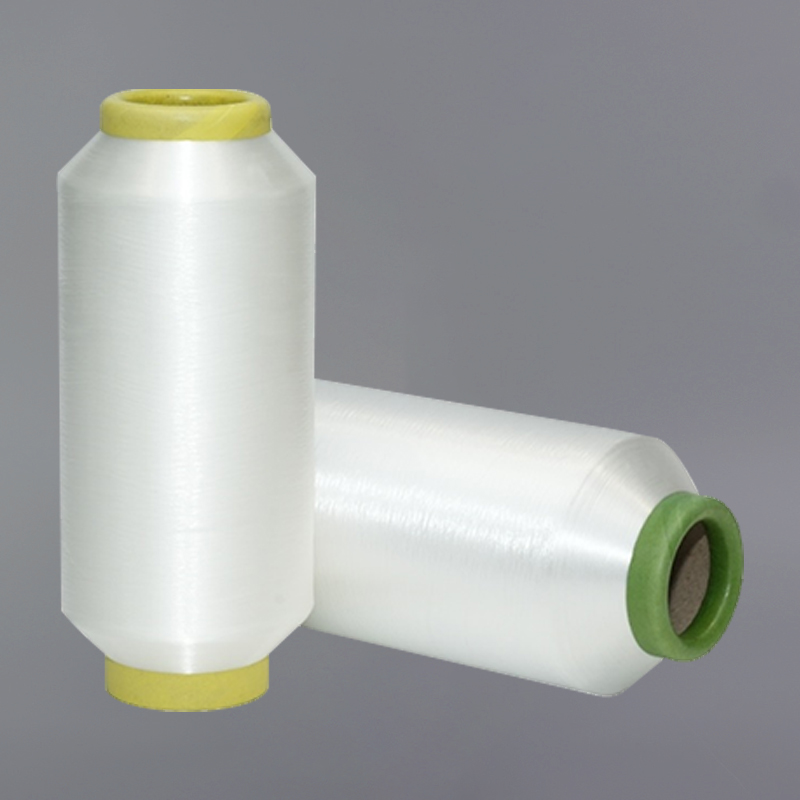 Micro Filament Polyester Yarn for Breathable Fabrics This yarn offers sub-0.5 DPF micro filaments, increasing surface area and air channels for better moisture vapor escape, making it suitable for linings and lightweight activewear. View Product → Micro filament polyester yarn is a typical choice for breathable linings and lightweight activewear because it allows moisture vapour to escape without letting wind pass through completely.
Textured yarns, such as DTY, have a crimped and bulky surface. This increases the distance between fibres and creates more void space for air and moisture movement. Flat FDY yarns, by contrast, can make a denser fabric that may feel less airy. For breathable recycled polyester, textured or microfilament yarns are often preferable. A high-twist yarn can also create microscopic wicking channels along the filament bundles.
Knitted fabrics, especially jersey and mesh types, are inherently more breathable than tightly woven plain weaves. A lightweight knitted fabric from recycled polyester can have an air permeability above 200 L/m²/s at a 100 Pa pressure difference, while a heavy woven twill may be below 50. If you are selecting a recycled polyester fabric for a shirt, look for a GSM (grams per square metre) under 150 and a needle count that leaves visible openings.
Because polyester naturally repels water, most breathable recycled polyester fabrics receive a hydrophilic finish that lets sweat spread across the surface and evaporate. This finish is not permanent and must be reapplied after many washes. Some suppliers add a durable water repellent (DWR) on the outside to keep rain out, but this reduces breathability. Clarify with your manufacturer whether the finish is on the inside, outside, or both.
If you are sourcing recycled polyester for your product line, use these practical checks:
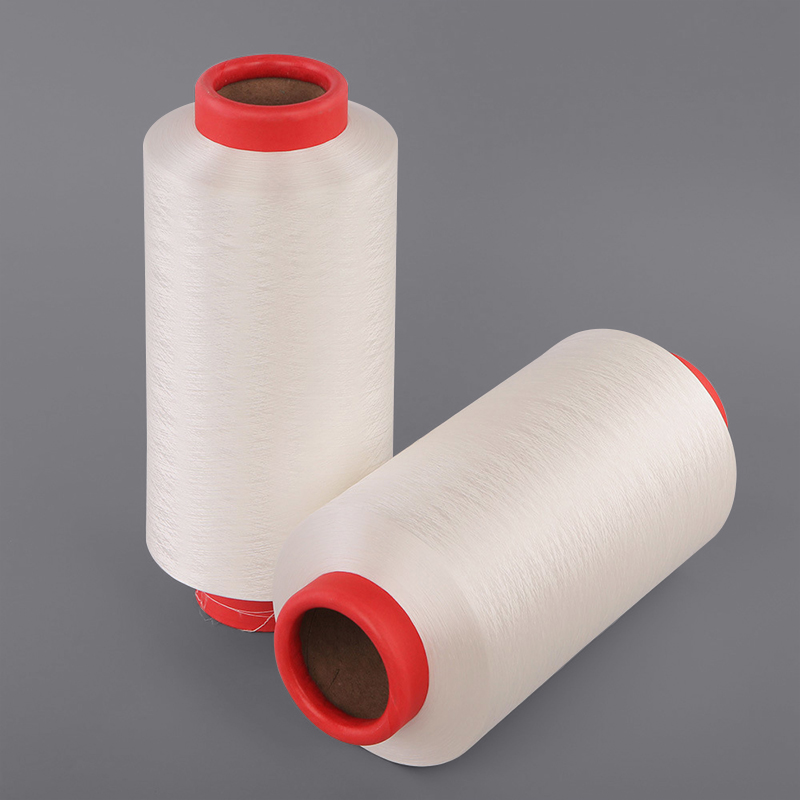 Polyester Finest Yarn in 7D and 10D DTY Available in ultra-fine 7D and 10D DTY variants, this yarn provides high strength and resilience, ideal for applications requiring a very fine, breathable recycled polyester. View Product →
 When the supplier understands the application, they can select the right polyester finest yarn or microfibre variant. Not all recycled polyester yarns are created equal: some are made from PET bottle flakes, others from pre-consumer fibre waste. The feedstock affects colour consistency and spinnability, but not breathability directly.
Even with all the technical caveats, recycled polyester offers a compelling combination of sustainability and performance. Compared to virgin polyester, it reduces petroleum use and diverts plastic waste, yet it can be spun into the same fine, textured, or microfilament yarns that make breathable fabrics. The environmental benefit does not force a trade-off in comfort.
In fact, many recycled polyester yarns now have better quality consistency than a decade ago. Manufacturers that invest in advanced spinning lines can produce 20 denier microfibres from rPET flakes, which are ideal for lightweight, breathable base layers. The key is to work with a supplier that can document the entire chain from bottle or fibre scrap to finished yarn, and that offers the same range of yarn types as virgin polyester.
So, is recycled polyester breathable? Yes, when the fibre denier, yarn texture, fabric structure, and finishing are engineered for airflow and moisture management . The material itself is not a barrier; it is actually a good base for quick-drying activewear. For brands or manufacturers seeking recycled content without sacrificing comfort, fine filament and microfibre polyester are proven paths. Ask for test data, request samples, and partner with a yarn supplier who can tailor the product to your end use.
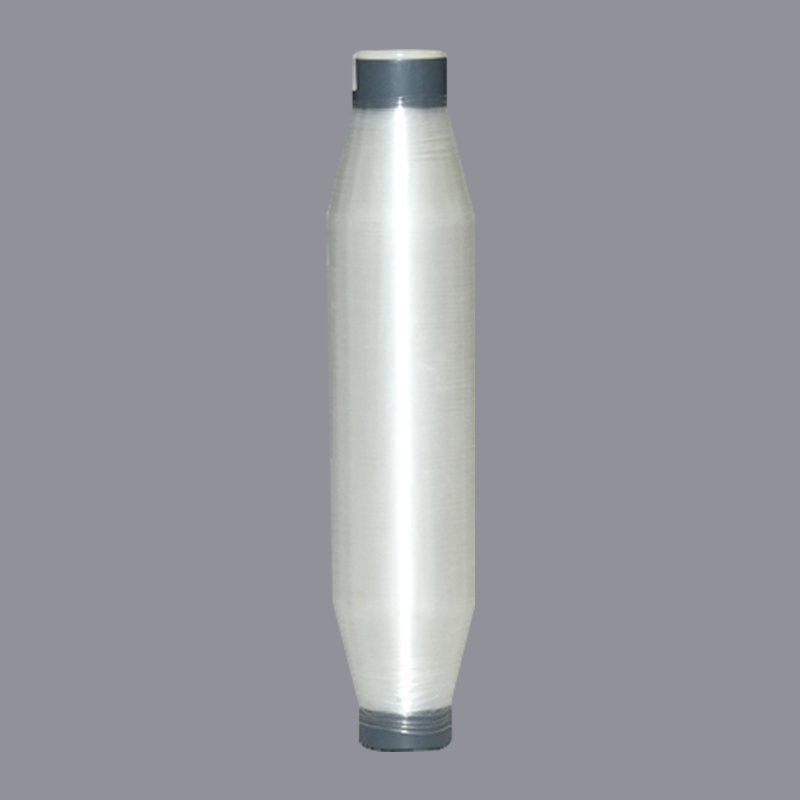
그것은 완전히 생분해 가능한 바이오-베이스 PLA로 만들어집니다 특징: 1. 산업용 퇴비 제품 2. PLA로 만든 3. 지구에서 지구로 친환경적입니다 ...
더 읽으십시오
그것은 폴리 에스테르로 만들어졌으며, 우리는 최고의 원사를 특별히 생산할 수 있으며, 7d 및 10d dty는 공장에서 실행 가능합니다. 특징: 1. 최고의 원사 2. 좋은...
더 읽으십시오
그것은 폴리 에스테르로 만들어졌으며, 우리는 특별한 생산 마이크로 필라멘트, dpf는 0.5를 줄일 수 있습니다. 특징: 1. 마이크로 필라멘트 2. 좋은 끈기와 되감기 ...
더 읽으십시오If you are comparing fabrics for sportswear or sustainable everyday clothing, you have probably asked yourself: is recycled polyester breathable? The shor...
더 읽기예, 폴리에스테르는 재활용이 가능하지만 폴리에스테르 100%인 경우에만 가능합니다. 혼합된 직물, 염료 및 기능성 첨가물은 대부분의 사람들이 예상하는 것보다 소비 후 재활용을 훨씬 더 어렵게 만듭니다. 기계적 재활용이 가장 일반적인 경로이지만 일반적으로 품질이...
더 읽기신발 공장에서 갑피를 변형시키지 않고 정확히 110°C에서 접착되는 저융점 원사를 요구하거나 보호복 공장에서 50번의 산업 세탁 후에도 표면 저항 한계를 충족하는 정전기 방지 PET 원사가 필요한 경우 고성능 직물의 실제 정의는 실용적입니다. 즉, 마케팅 라벨이 아닌 원재료에...
더 읽기Copyright © GC 섬유 All Rights Reserved.
